World Cup 2026 format explained: 48 teams, 104 matches and 16 cities

FifaxEditor
2026-07-24
How 12 groups produced a round of 32
The 48 teams were divided into 12 groups of four. Each group winner and runner-up advanced, joined by the eight best third-placed sides, producing a 32-team knockout bracket. The comparison between third-placed teams made every goal and point relevant beyond the local group table because qualification could depend on results elsewhere. Once the bracket began, the tournament moved through the round of 32, round of 16, quarter-finals, semi-finals and final. A finalist therefore played eight matches instead of the seven required under the previous 32-team format. The system expanded opportunity without returning to the proposed three-team groups, but it also meant that two-thirds of the field progressed from the opening stage. Supporters evaluating the format should distinguish between access and elimination pressure: more countries reached the knockout phase, yet the eventual champion had to survive one additional single-match round.
A 104-match tournament across three countries
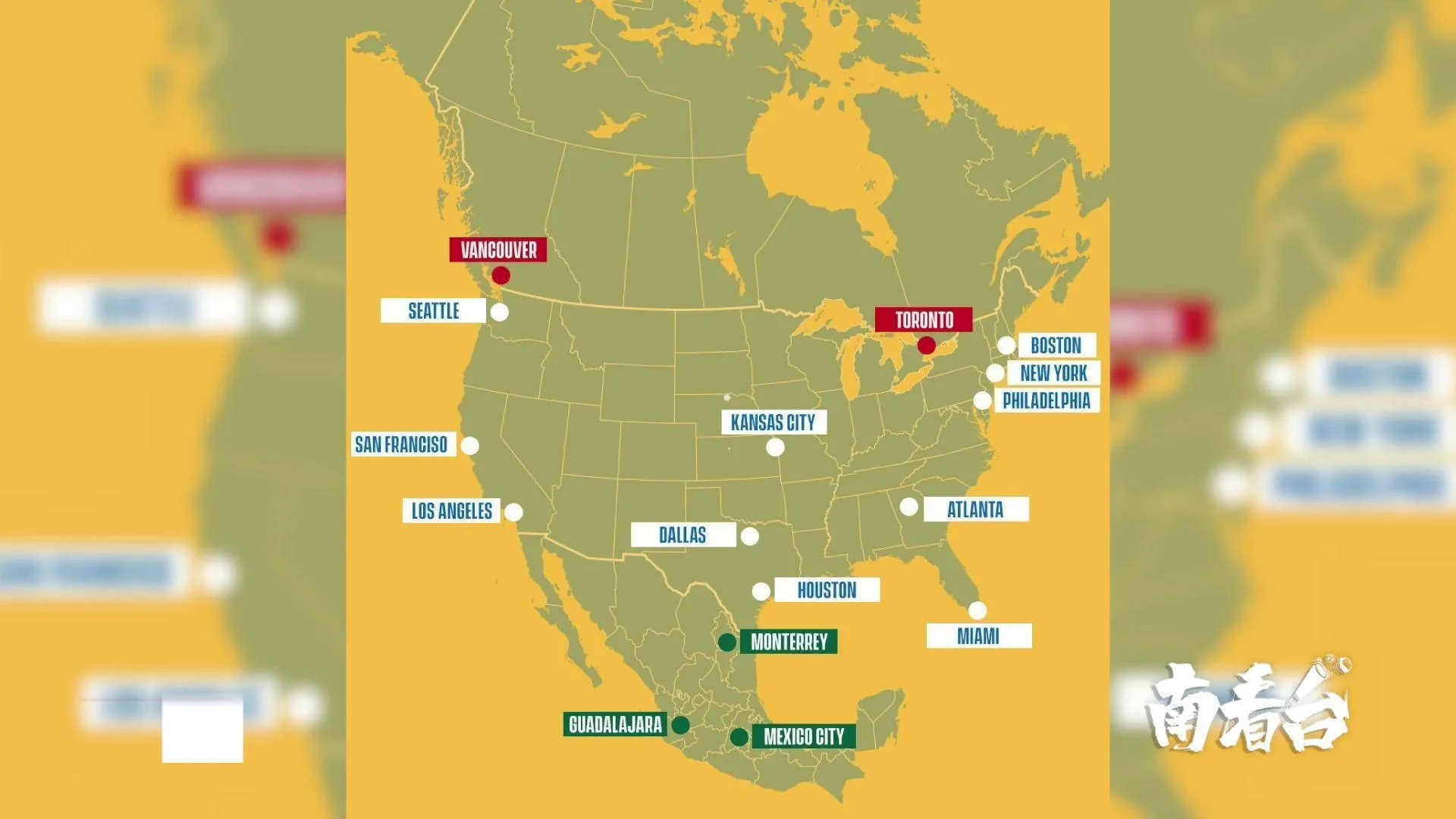
From 11 June to 19 July, the tournament staged 104 matches in 16 host cities across Canada, Mexico and the United States. Toronto and Vancouver represented Canada; Mexico City, Guadalajara and Monterrey represented Mexico; and 11 United States cities completed the venue network. Mexico City hosted the opening match, while New York New Jersey Stadium staged the final. The scale created a scheduling challenge unlike a compact single-country tournament. Organisers had to coordinate different time zones, climates, travel distances, training bases and local transport systems while maintaining adequate rest. Regional scheduling helped reduce some repeated cross-continent journeys, but supporters and teams still needed to plan around a geographically large event. The three-country model also spread the tournament's audience and infrastructure demands, making transport guidance and venue-specific information as important to visitors as the match calendar itself.
What expansion changed
Expansion widened access to the World Cup and gave more national teams a realistic route to the finals. It also created a new knockout round, more broadcast inventory and additional opportunities for host cities. Those benefits came with trade-offs. Players on the two finalists faced eight matches, tournament operations had to support 104 fixtures, and the best-third-place system made the group-stage picture harder to understand without comparing multiple tables. Competitive quality cannot be judged only by the number of teams: the important questions are whether groups remain meaningful, whether rest is distributed fairly and whether the additional knockout round produces compelling contests. The long-term assessment should also consider travel, environmental cost, ticket access and the burden placed on domestic calendars. The 48-team format is therefore more than a larger bracket; it changes how supporters follow qualification, how coaches manage squads and how organisers design the entire event.
Rest, travel and the 56-day tournament window
FIFA kept the combined player-release, rest and tournament period at 56 days, matching the total used for the 2010, 2014 and 2018 editions. Many fixtures were organised into eastern, central and western regions to reduce repeated cross-continent travel. FIFA also stated that 103 of the 104 matches gave teams at least three rest days, an important safeguard when finalists now had to play eight games. Rest-day totals, however, do not capture every workload factor. A late match followed by travel, a change in climate or an extra-time knockout tie can reduce the practical recovery window. Coaches therefore needed deeper squads and careful rotation, while organisers had to balance television scheduling with sporting fairness. The expanded format made recovery planning a competitive issue rather than a background logistical detail.
The qualification mathematics changed too
Thirty-two of 48 teams advanced from the group stage, so finishing third no longer meant automatic elimination. Results in other groups could determine progression, making points, goal difference and goals scored important beyond a team's own four-team table. Coaches also had to decide whether protecting a narrow result was sufficient or whether another goal could determine a cross-group comparison. Supporters could not always know a team's final status when its match ended because later groups still had the power to change the ranking of third-placed sides. Once the round of 32 began, the route became longer and simpler: every remaining match was elimination football, and the champion had to survive five knockout rounds instead of four. The format therefore combined a more complicated group-stage calculation with an extended but easily understood knockout bracket.
Sources
This independent article is based on FIFA's official coverage. Image rights remain with their respective owners; verify permission and attribution before reuse.