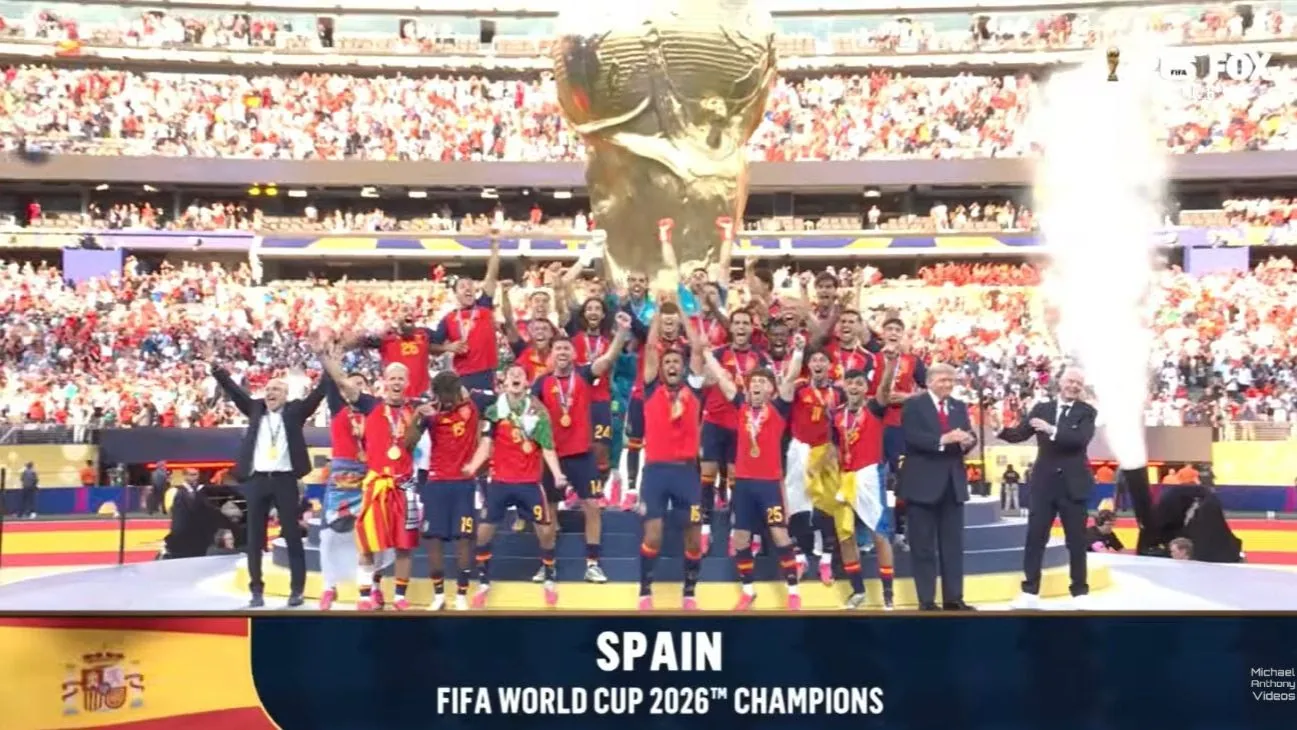
World Cup 2026 final standings: Spain first, Argentina second

FifaxEditor
2026-07-24
The World Cup 2026 top eight
The final top eight were Spain, Argentina, England, France, Norway, Belgium, and joint seventh Morocco and Switzerland. Spain took first place by beating Argentina 1-0 after extra time in the final. England secured third place in a 6-4 bronze match against France, while the remaining four positions were determined from the quarter-finalists under FIFA's tournament ranking method. A simple numbered list is useful, but it does not tell the complete story. Spain and Argentina reached the final and therefore settled first and second directly; England and France played for third; the four quarter-finalists did not play additional ranking fixtures. Their order was calculated from results collected during the competition. That distinction matters when comparing teams that exited in the same round, because finishing fifth rather than seventh does not mean one side won a separate placement match.
Tournament standings are not the FIFA World Ranking
These positions describe performance within the 2026 tournament, not the long-term FIFA Men's World Ranking. When teams are eliminated in the same round, FIFA orders them by the competition's ranking criteria, beginning with tournament points and then using goal difference and goals scored. A knockout match decided on penalties is treated as a draw for the relevant match record, even though one team advances. If the available criteria still cannot separate teams, they can share a position, which explains the joint seventh place for Morocco and Switzerland. The FIFA Men's World Ranking serves a different purpose: it evaluates national-team results across a longer period and applies its own points model. Readers should therefore avoid using the final tournament table as proof that the fifth-placed team is automatically the fifth-best national side in the world.
What the ranking says about the tournament
The table highlights several important tournament stories. Spain and Argentina kept Europe and South America at the centre of the title race, while England recorded their best World Cup finish since winning in 1966. Norway reached the quarter-finals on their return to the competition, and Morocco again finished among the leading nations after another deep run. Belgium and Switzerland also demonstrated that the expanded field did not prevent experienced teams from reaching the final eight. At the same time, a placement table should be read alongside the path each nation faced. Draw difficulty, extra-time matches, travel and the timing of injuries can all shape a knockout campaign without appearing in the final number. The standings are best used as an official summary of what happened, then supplemented with match reports, opponent strength and performance data when assessing how each team actually played.
Why fifth to eighth deserve separate attention
Norway returned to the World Cup for the first time since 1998, eliminated Cote d'Ivoire and Brazil, and took England to extra time before finishing fifth. Belgium were sixth after reaching the quarter-finals, while Morocco and Switzerland shared seventh because FIFA's ranking criteria could not separate them. The same elimination round therefore produced four very different tournament stories. Norway's placement reflected a breakthrough run and notable knockout wins; Belgium's position represented another appearance in the latter stages; Morocco confirmed that their recent competitiveness was not limited to one tournament; and Switzerland again proved difficult to eliminate. Looking only at the label “quarter-finalist” removes those differences. The official order provides a starting point, but match context, opponent quality and the manner of elimination explain why each campaign will be remembered differently.
How to read the complete 48-team table
Read the table in two stages. First identify the round in which a team was eliminated, because sporting progress is the main dividing line. Then compare tournament points, goal difference and goals scored across every match to order teams that exited at the same stage. A knockout game decided on penalties counts as a draw for this calculation, even though the shootout determines who advances. Shared positions can remain when the published criteria do not separate two teams. This method explains FIFA's official order and makes a 48-team competition easier to summarise, but it is not a replacement for the FIFA Men's World Ranking. It also should not be used alone to predict future form: one tournament is a short sample shaped by draw difficulty, injuries, travel and knockout variance. For analysis, pair the table with each team's match list and performance data.
Sources
This independent article is based on FIFA's official coverage. Image rights remain with their respective owners; verify permission and attribution before reuse.