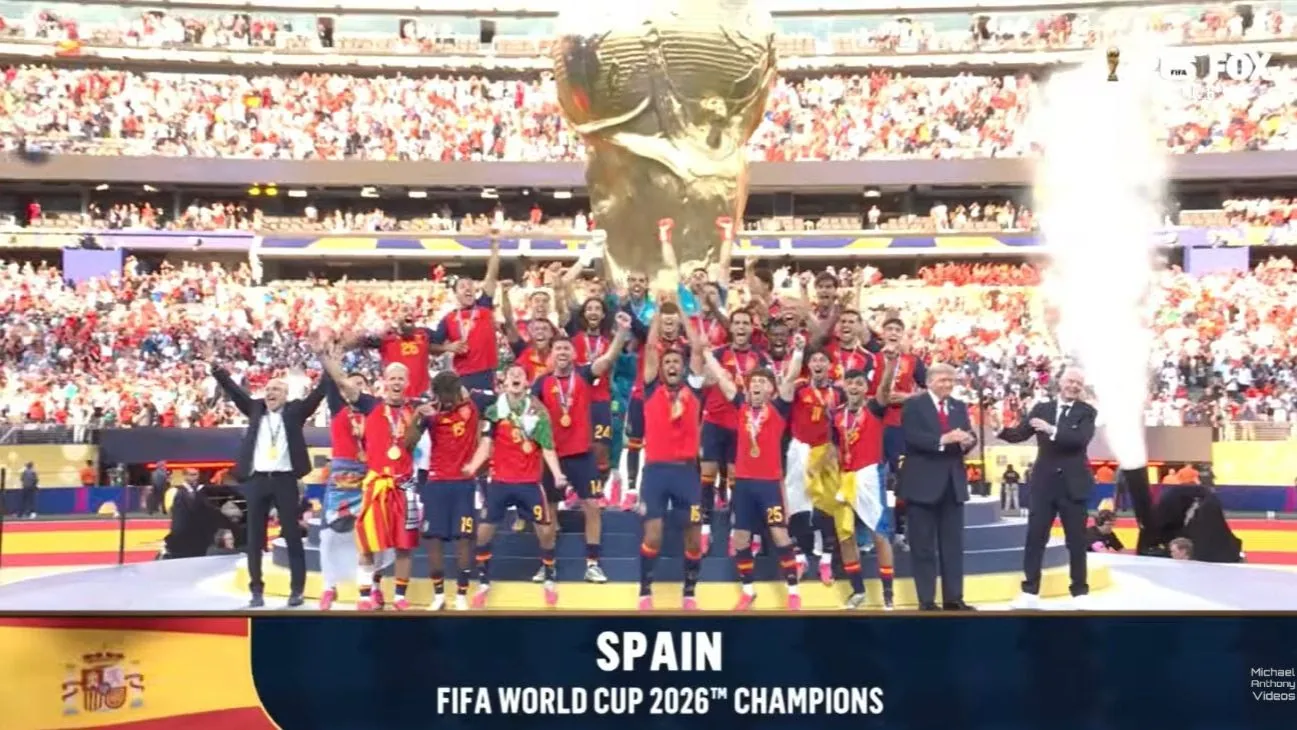
Spain's road to the 2026 World Cup title: all eight matches

FifaxEditor
2026-07-24
Group stage: from a setback to first place
Spain opened with a 0-0 draw against Cabo Verde, a result that immediately tested their response to a compact opponent and the pressure attached to a favourite. Rather than abandoning their approach, they improved the speed and positioning of their attacks in the second match and beat Saudi Arabia 4-0. The final group game against Uruguay posed a different challenge: Spain had to manage a tighter contest, protect the centre and remain patient until the decisive moment in a 1-0 win. Seven points were enough to secure first place and a favourable sense of momentum entering the expanded knockout phase. The progression across the three games mattered as much as the results. Spain moved from sterile control to more purposeful possession, then demonstrated that they could defend a narrow lead. Those lessons became a template for the rounds that followed.
Knockout stage: solving different kinds of matches
Spain beat Austria 3-0 in the round of 32, edged Portugal 1-0, defeated Belgium 2-1 and then overcame France 2-0 before the extra-time final against Argentina. Each tie required a different solution. Austria gave Spain space to turn pressure into a clear scoreline; Portugal demanded patience in a one-goal contest; Belgium became the only team to score against the champions; and France forced Spain to manage elite transition threats while protecting a semi-final lead. The final then lasted 120 minutes before Ferran Torres scored. This variety is central to understanding the title. A knockout champion cannot depend on every opponent defending in the same way or every match following the same rhythm. Spain changed personnel, adjusted the height of their pressure and varied the speed of possession without losing the spacing that protected them when attacks broke down.
What the title run revealed
Seven straight wins followed the opening draw, with Spain keeping seven clean sheets and conceding only once across eight matches. The defensive record did not come from sitting deep for long periods. Spain generally tried to control where possession was lost, keep enough players behind the ball and recover quickly before opponents could attack open space. In possession, they combined patient circulation with width and movement between the lines, accepting that some knockout matches would remain scoreless for long stretches. The run also showed the importance of squad depth. Different players delivered decisive goals, defensive actions and creative contributions as the tournament progressed. Stable spacing, emotional control and the ability to win both comfortable and narrow matches were the recurring qualities. The championship was therefore not a single tactical trick; it was the result of applying a recognisable structure to several different problems.
Different players supplied the decisive moments
Spain's run did not depend on one scorer. Lamine Yamal helped reset the campaign against Saudi Arabia, Mikel Oyarzabal delivered goals in the group and knockout stages, Mikel Merino decided tight ties, and Pedro Porro contributed at both ends before helping create the final winner. Ferran Torres then went from losing his starting place to scoring the tournament's most important goal. That distribution made Spain harder to prepare for because opponents could not solve the attack by isolating one player. It also reflected the value of substitutions and role changes across an eight-match schedule. Tournament depth is not merely the number of recognised names on a bench; it is the ability to introduce a player who understands the structure and can influence a specific match state. Spain repeatedly received that kind of contribution.
The numbers that define the champions
Spain played eight matches, won seven after the opening draw, kept seven clean sheets and conceded only once. FIFA's statistics placed them first for clean sheets and at the top of the possession-control measure. The final supplied another clear indicator: 20 attempts to Argentina's two. Those figures show why the title was built as much on prevention and control as on attacking talent. Clean sheets reduced the need for desperate late comebacks, while consistent possession allowed Spain to choose when to increase the tempo. The single goal conceded also reveals the reliability of the structure across several different opponents rather than in one favourable matchup. Statistics cannot describe every tactical detail, but here the results, chance balance and defensive record point in the same direction: Spain repeatedly made matches take place on terms they could manage.
Sources
This independent article is based on FIFA's official coverage. Image rights remain with their respective owners; verify permission and attribution before reuse.